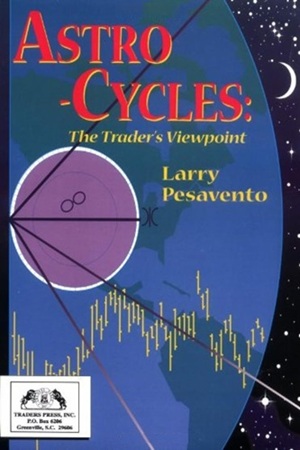


Astro Cycles: The Trader’s Viewpoint is a trader-oriented introduction to astro-cycle timing—built to translate planetary mechanics (aspects, synodic periods, lunar phenomena) into a repeatable market-timing workflow. Pesavento starts by grounding the reader in the essentials of the solar system from a market-application perspective—what aspects are, how synodic periods work, why geocentric measurement is emphasized for trading decisions, and how eclipses, declination extremes, retrogrades, equinoxes/solstices, and lunar events can be treated as timing markers.
The book then moves into practical tools: understanding and using ephemeris data, interpreting aspect “clusters” (very few or very many aspects) as potential precursors to outsized market movement, and tracking specific planet pairs that historically correlate with trend changes.
Crucially, this is not presented as astrology-for-astrology’s sake. The trading section integrates cycle windows with disciplined execution rules, plus concrete entry frameworks (including the Gartley “222” and a Fibonacci-based 1-3-5 entry method) so timing signals are converted into risk-defined trades rather than vague forecasts.
If your intent is to add a structured astro-cycle layer to a Gann-adjacent timing process—while still respecting pattern recognition, risk control, and repeatable rules—this book is designed as a working manual, not a philosophical overview.
What You’ll Learn:
- How the book distinguishes astronomy (planet positions/aspects) from astrology (interpretation)—and how to use only what is actionable for trading.
- Core timing components: planetary aspects (conjunction/sextile/square/trine/opposition), synodic periods, and why certain pairs are treated as higher-impact cycles.
- How to read and apply an ephemeris, including practical “what matters” guidance and examples for market use.
- Lunar and cycle phenomena to monitor (declination extremes, nodes, apogee/perigee, full/new moon) and how they fit into a timing checklist.
- A probability-minded concept of “aspect environment”: why very low or very high aspect counts can precede dramatic market behavior.
- A disciplined execution layer: the Ten Rules of Trading, plus timing-to-entry integration using Gartley 222 and the 1-3-5 Fibonacci entry structure with stops and profit objectives.
Astro-Cycles: The Trader's Viewpoint By Larry Pesavento
| Author | Larry Pesavento |
|---|---|
| File Types | |
| Pages | 203 |
Related products