
Day Trading for 50 Years is a rare, experience-driven study drawn from five decades of continuous market observation by Michael S. Jenkins, a well-known researcher in market geometry, time cycles, and precision trading techniques. Rather than presenting a single indicator or short-term system, this book distills long-term insights gained from thousands of trading days across multiple market environments.
Jenkins approaches day trading as a structured interaction between time, price behavior, and trader discipline, not as a reaction to news or short-term volatility. The work reflects a Gann-influenced mindset in which market movement is governed by repeatable principles, learned only through sustained observation and methodical record-keeping. Emphasis is placed on recognizing rhythm, proportion, and timing within intraday price action, rather than chasing momentum or relying on mechanical signals alone.
Throughout the book, Jenkins explains how markets change character across decades while still respecting core structural behaviors. He highlights recurring intraday patterns, common trader errors, and the importance of aligning execution with broader market context. This perspective allows readers to see day trading not as a fast gamble, but as a disciplined analytical craft refined over time.
The value of this book lies in its long-range perspective. Few trading works are written after fifty years of direct engagement with the markets. As a result, the material serves both as a technical reference and a mindset guide for traders seeking longevity, consistency, and structural understanding rather than short-lived tactics.
What You’ll Learn:
This book teaches how professional day trading skills evolve through long-term exposure to real market conditions. You will learn how intraday price movement reflects recurring structural behavior that remains consistent even as instruments, technology, and participants change. Jenkins explains how to recognize meaningful price action versus noise, helping traders avoid over-trading and impulsive decision-making.
The material emphasizes the importance of time awareness—knowing when markets are most likely to expand, stall, or reverse during the trading session. You will gain insight into how experienced traders manage risk, protect capital, and adapt position size based on changing volatility rather than fixed rules.
The book also develops the psychological dimension of trading, showing how discipline, patience, and consistency separate long-term survivors from short-term speculators. By studying decades of market behavior, readers learn why many popular techniques fail over time and how structured observation leads to durable trading principles.
Overall, the work trains traders to think in terms of process and longevity, aligning short-term execution with enduring market structure.
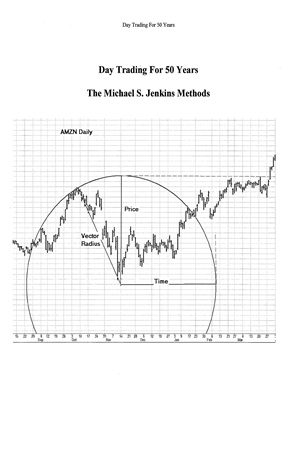
Day Trading For 50 Years: The Michael S. Jenkins Methods
| Author | Michael Jenkins |
|---|---|
| File Types | |
| Pages | 192 |
Related products